> For the complete documentation index, see [llms.txt](https://helpcenter.xopero.com/xopero-one-en/llms.txt). Markdown versions of documentation pages are available by appending `.md` to page URLs; this page is available as [Markdown](https://helpcenter.xopero.com/xopero-one-en/deployment-and-configuration/xopero-one-agent/installation-on-windows-servers-and-workstations.md).
# Installation on Windows servers and workstations
{% tabs fullWidth="false" %}
{% tab title="WS 2008R2 & WS 2012" %}
## Installer download
1. Login to **Xopero ONE Management Service** (**XMS**) using a web browser, then go **Settings** > **Advanced** > **Workers** and click the **Download agent** button.
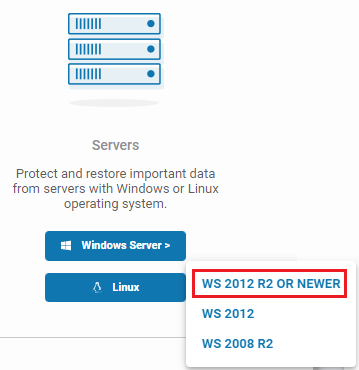
2. The **Download agent** window will open— scroll down to the **Server** section and click **Windows Server >** button.
3. Select **WS 2012** or **WS 2008 R2** to download a dedicated installer.
4. The download will start automatically; additionally, an **Installation** tab with a step-by-step installation instruction will pop-up in **XMS**.
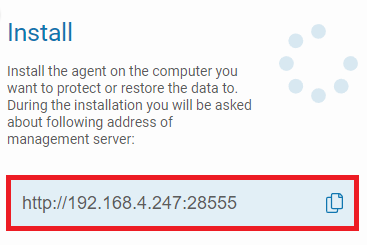
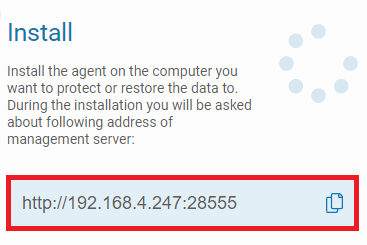
5. Under the **Install** section you will see the address combined a port — save it for later as you will have to use it during agent installation.
6. Once the installation wizard is downloaded, you can move to the installation process.
***
## Installation process
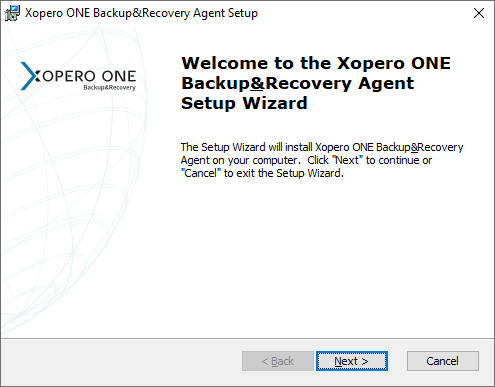
1. Open and run the downloaded setup wizard. Click **Next** to begin the installation process.
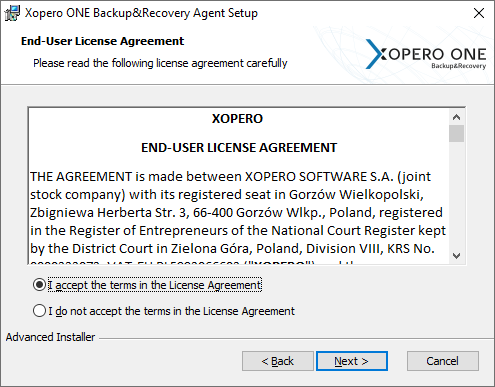
2. Read and accept the **End-User License Agreement**, then move to the next step.
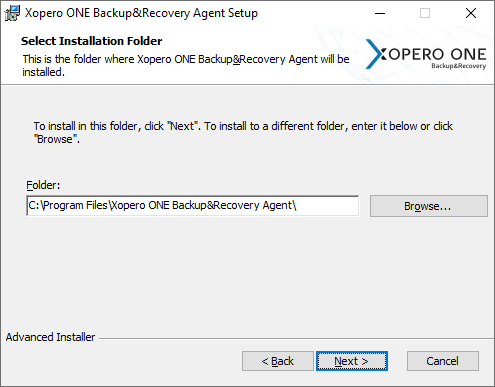
3. Choose the installation directory for the **Xopero ONE** client.
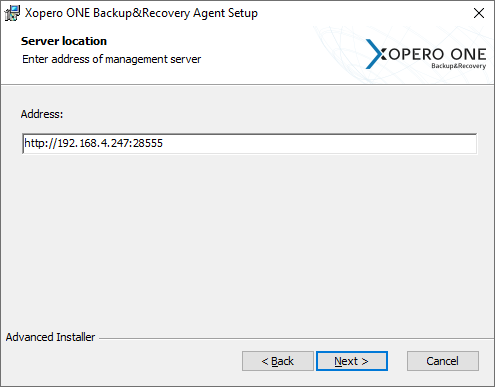
4. Paste the previously copied address to the **Address** field and hit **Next** to continue.
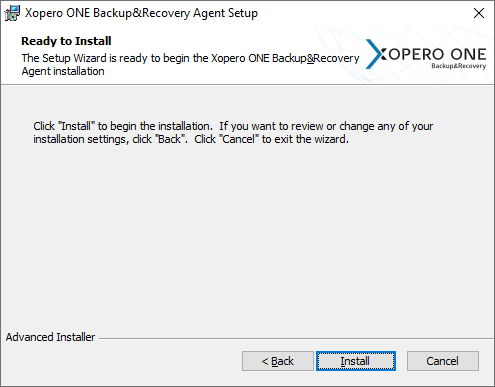
5. Click **Install** to start the installation.
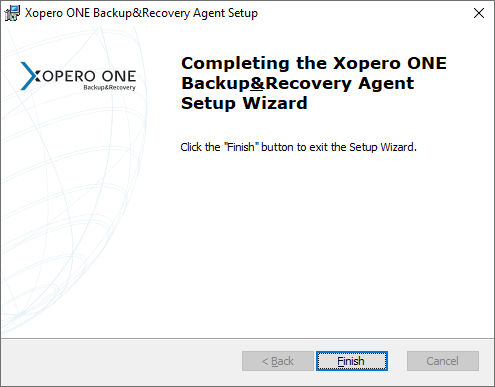
6. Once the wizard finishes installation, click the **Finish** button to close it.
7. You can now activate your device in **Xopero ONE Management Service**.
{% endtab %}
{% tab title="WS & WS 2012 R2+" %}
## Installer download
1. Login to **Xopero ONE Management Service** (**XMS**) using a web browser, then go **Settings** > **Advanced** > **Workers** and click the **Download agent** button.
2. The **Download agent** window will open— scroll down to the **Server** section and click **Windows Server >** button.
3. Select **WS 2012 R2 OR NEWER** to download a dedicated installer.
4. The download will start automatically; additionally, an **Installation** tab with a step-by-step installation instruction will pop-up in **XMS**.
5. Under the **Install** section you will see the address combined a port— save it for later as you will have to use it during agent installation.
***
## Installation process
1. Open and run the downloaded setup wizard. Click **Next** to begin the installation process.
2. Read and accept the **End-User License Agreement**, then move to the next step.
3. Choose the installation directory for the **Xopero ONE** client.
4. Paste the previously copied address to the **Address** field and hit **Next** to continue.
5. Click **Install** to start the installation.
6. Once the wizard finishes installation, click the **Finish** button to close it.
7. You can now activate your device in **Xopero ONE Management Service**.
{% endtab %}
{% tab title="MSI (mass deployment)" %}
## Installation process
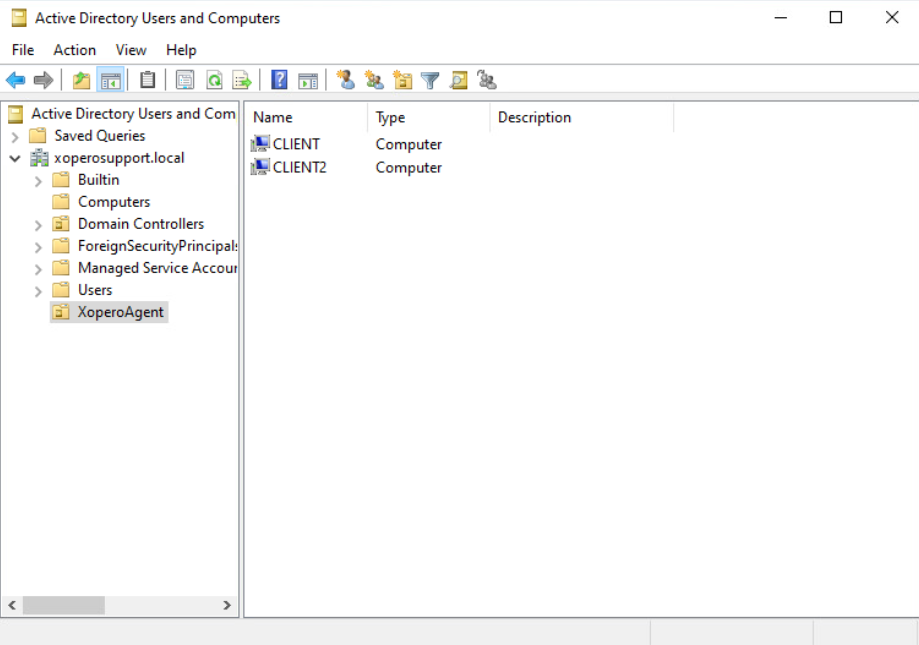
1. Open **Active Directory** and create a new **Organizational Unit** on the domain controller under the **Active Directory Users and Computers** catalog.
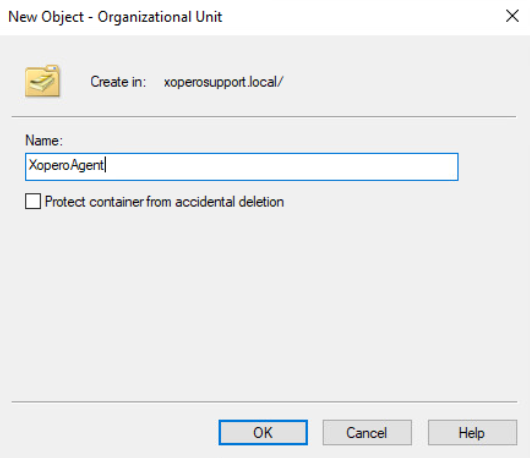
2. Enter a custom name for the **Organizational Unit** and click **OK** to confirm.
3. Transfer all devices you want to have the **Xopero ONE** agent installed on to the newly created **Organizational Unit**.
4. Create a folder that will be **available on your network** to all computers that are to be covered by the installation policy of the **Xopero ONE** **agent**, and place the **.msi** installer in it.
{% hint style="info" %}
The **.msi** installer can be downloaded in **Xopero ONE Management Service** (**XMS**), in **Settings** > **Advanced** > **Workers** > **Download agent** > **Endpoints**.
{% endhint %}
5. Change access permissions of the folder created in the previous step. Right-click the folder and select **Properties**, then go to **Sharing** tab and click the **Advanced Sharing** button.
6. Make sure the ✅**Share this folder** checkbox is checked and click **Apply** to save your settings.
7. Next, click the **Permissions** button under the **Comments** field and change user permissions for the folder.
> For domain adminstrators: **Full Control**\
> For authenticated users: **Read**
8. Open the **Group Policy Management** (**GPO**) window, find the OU created in step 1, right-click it, and select the **Create a GPO in this domain, and Link it here...** option from the drop-down menu.
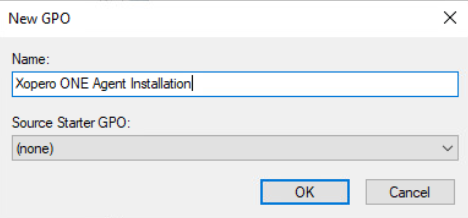
9. Enter a custom name for your new group object and click **OK**.
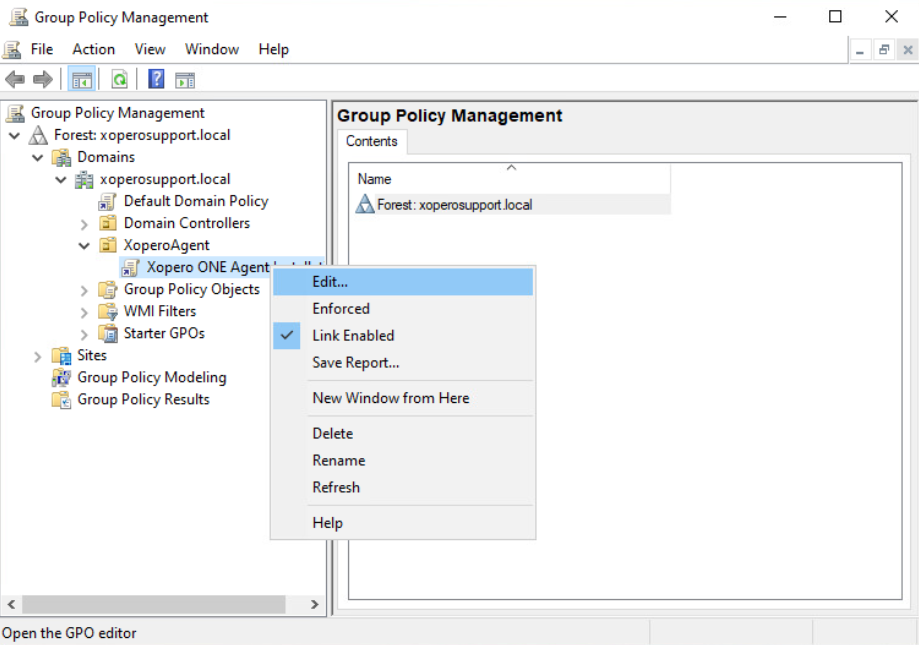
10. Right-click the newly created rule and select **Edit...** from the drop-down menu.
11. Expand **Computer Configuration** > **Policies** > **Software Settings** > **Software Installation** tabs. Inside **Software Installation**, right-click anywhere on the right side of the window and select **New** > **Package...** from the dropdown.
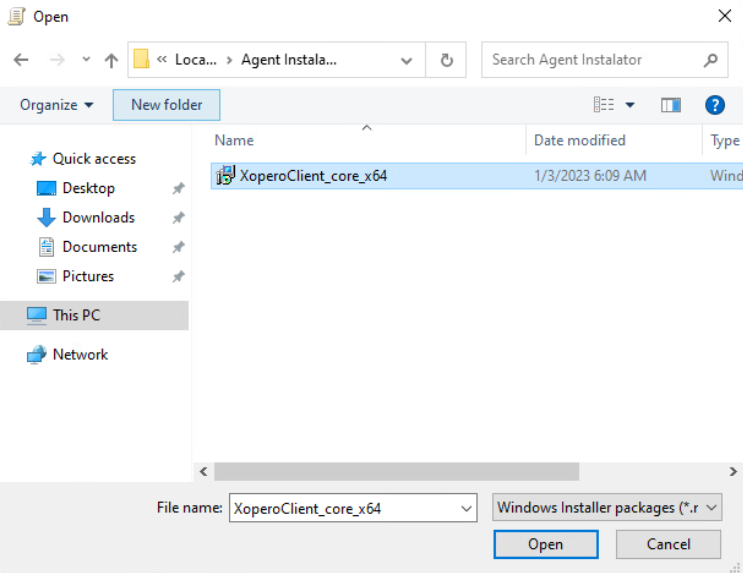
12. Find the shared directory in which you've placed the **.msi** installer in, then select and open it.
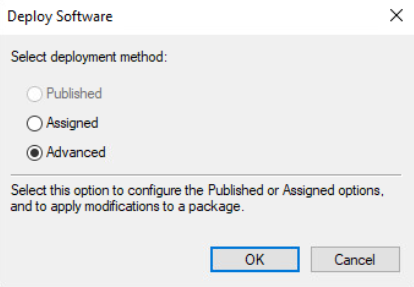
13. In **Deploy Software** window select the **Advanced** deployment method and click **OK**.
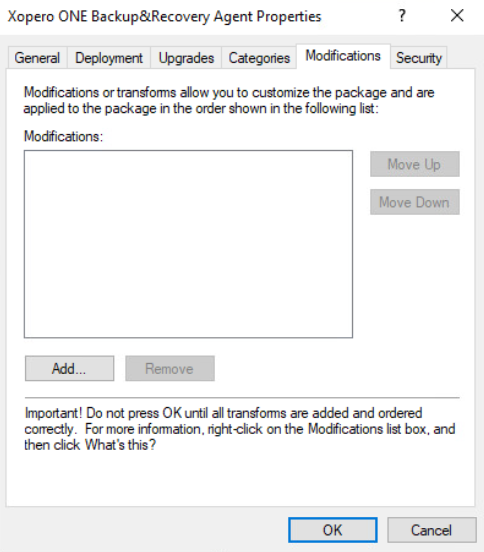
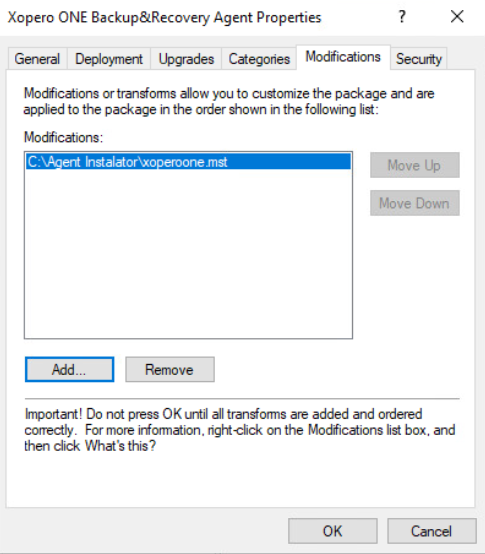
14. In **Xopero ONE Backup\&Recovery Agent Properties** window, switch to **Modifications** tab.
15. Create an **.mst** file containing additional configuration for the installer — you can use **Orca** software available as part of the **Windows SDK**:
{% hint style="success" %}
Find how to install **Orca** on [Microsoft Learn website](https://helpcenter.gitprotect.io/).
{% endhint %}
1️⃣ Run Orca, go to **File** > **Open**, then find and select the **Xopero ONE** **agent** **.msi** installer.
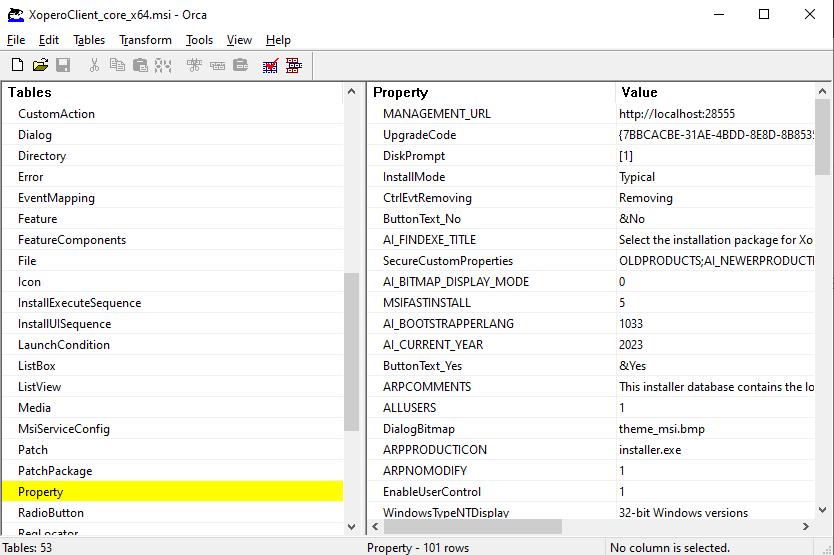
2️⃣ Click **Transform** and select **New Transform** from the context menu. Find the **Property** table and double-click the **MANAGEMENT\_URL** row to edit it — change its value to your [**XMS**](#user-content-fn-1)[^1] IP address (in **XMSIPaddress:port** format, i.e., ).
3️⃣ Additional parameters that can be edited are:
> **APPDIR** — **Xopero ONE** agent installation path
4️⃣ Next, click **Transform** > **Generate transform** and save the **.mst** file in the previously created shared directory.
16. Back to **Xopero ONE Backup\&Recovery Agent Properties** window, click **Add...** and specify the path to the **.mst** file corresponding to the **XMS** address (parameter for the **MSI** installer). Once done, click **OK** to confirm the changes and close the window.
17. Once the **GPO** responsible for **MSI** installer distribution and deployment is successfully created, you can implement it on user computers covered by this policy in **Active Directory**— simply run **CMD** and use the following command:
```
gpupdate /force
```
18. After restarting the updated station, the **Xopero ONE** **agent** will be automatically installed with the parameter corresponding to the **XMS** address.
{% endtab %}
{% endtabs %}
To learn how to activate the agent in the Xopero management console, check the *Useful links and items* section.
## Useful links and items
{% content-ref url="/pages/sUUV69SpYVc3DM8CFnms" %}
[Agent configuration](/xopero-one-en/deployment-and-configuration/xopero-one-agent/agent-configuration.md)
{% endcontent-ref %}
[^1]: Xopero ONE Management Service